How to Read Current Seams for River Fishing: A Practical Guide to Finding Easy Feeding Lanes
Learn how to spot current seams in rivers, understand where fish hold around them, choose smart casting angles, and control your drift or lure so you cover the highest-percentage water more effectively.
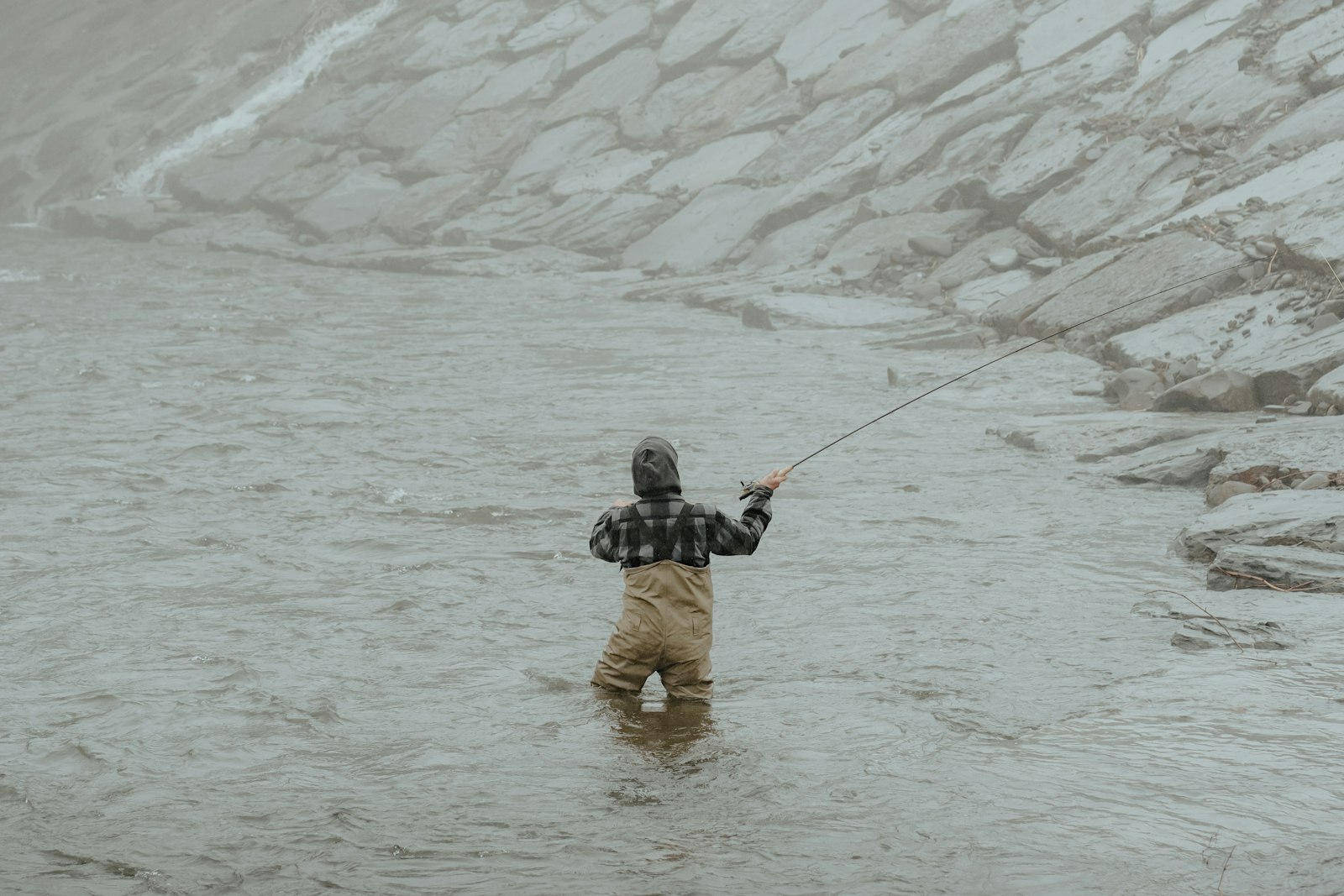
A lot of anglers fish rivers too fast. They cast at every riffle, every bank edge, and every big rock, but they never really ask a more important question: where can a fish hold with the least effort and still get first crack at food?
That question leads you straight to current seams.
A current seam is the dividing line between faster water and slower water. It can form beside a boulder, below a point, along a cut bank, at the edge of an eddy, or anywhere the river creates two different speeds of flow. These seams matter because fish love efficiency. They want oxygen, cover, and food, but they do not want to burn energy fighting heavy current all day.
When you learn to read current seams, river fishing stops feeling random. You begin to see the exact lanes that funnel drifting insects, baitfish, and disoriented food straight past fish that are waiting in softer water.
Why current seams matter so much
Recent river-fishing guides and water-reading tutorials still agree on the same basic idea: current seams are high-percentage water because they combine food delivery with energy savings. Faster current carries food. Softer water gives fish a place to rest. The seam is where those two benefits meet.
That is why trout, bass, walleye, and many other river fish often sit just off the fast side rather than right in the strongest flow. They can slide a few inches or a few feet into the feeding lane, grab the meal, and fall back into the cushion.
If you only remember one rule, remember this: fish usually use the seam edge, not the middle of the hardest current.
How to spot a current seam
Some seams are obvious and some are subtle. The easy ones show themselves as a visible line where choppy, fast water meets smoother water. You may see a bubble line, a foam trail, or a slight change in color and surface texture.
Other seams are created by structure you need to read first:
- a boulder splitting the flow
- a log or laydown changing current direction
- a gravel bar narrowing the channel
- a wing dam or riprap edge
- a sharp bank turn
- the edge of an eddy behind current-breaking cover
A good pair of polarized sunglasses helps a lot, but the bigger skill is simply slowing down and watching the river for thirty seconds before your first cast.
Where fish usually hold around a seam
Most fish do not sit in the seam exactly the same way in every river, but the pattern is consistent enough to guide your decisions.
Look first at:
- the slow side of the seam
- the downstream cushion behind rocks
- the inside edge where current begins to soften
- slightly deeper slots beside fast water
- seam intersections where two current lines meet
These are efficient ambush spots. The fish can stay in manageable water and let the river bring food to them.
In higher water, fish often slide even tighter to the protected side because the main flow is too expensive. In lower, clearer water, they may hold on more subtle seams near depth changes, weed edges, or undercut banks.
A simple beginner setup that works
You do not need specialty gear to learn seam fishing.
A dependable starting setup looks like this:
- a 6’6” to 7’ medium-light or medium spinning rod
- a 2000 to 3000 size spinning reel
- 8 to 12 lb fluorocarbon, or braid with a fluorocarbon leader
- a few compact moving baits such as inline spinners or small crankbaits
- a few simple soft plastics or jigs for slower seam work
- polarized sunglasses so you can actually read the water
The goal is not fancy gear. The goal is enough sensitivity to feel current changes and enough control to keep your presentation in the strike lane.
Step 1: Approach from downstream when possible
River fish often face upstream. If you march straight in from above or stomp onto the seam from the bank, you can ruin the spot before the first cast.
Action: Approach carefully from downstream or from an angle that keeps you out of the main sight line.
Common mistake: Walking right to the bank edge and throwing your shadow over the seam.
Expected feel: You should feel like you are sneaking into position, not rushing the water.
Step 2: Find the soft edge, not just the fast water
Beginners love casting into the obvious fast tongue because it looks fishy. Often the better zone is one foot to three feet to the side, where the current starts to relax.
Action: Track the line where the surface changes from pushy and broken to smoother and softer.
Common mistake: Fishing the heaviest current instead of the transition lane beside it.
Expected feel: Once you lock onto the seam, the river starts to look organized instead of chaotic.
Step 3: Make the cast above the target lane
A seam usually fishes best when your bait enters above the holding water and travels naturally into it.
Action: Cast upstream or slightly upstream of the seam so your lure, jig, or drift can settle into the lane before it reaches the fish.
Common mistake: Casting directly on top of the holding spot and dragging the lure across it too fast.
Expected feel: The presentation should arrive looking natural, not like it crashed into the zone late.
Step 4: Match your lure control to the seam
Different lures need different control, but the principle is the same: keep the bait in the transition as long as possible.
With small moving baits, use just enough retrieve speed to keep contact and maintain depth. With jigs or plastics, let the lure fall into the seam and make short controlled hops or drifts. With live or natural-style drifts, keep tension light enough that the bait moves with the current instead of skating unnaturally.
Action: Let the seam do part of the work and make small corrections with the rod.
Common mistake: Overworking the lure and pulling it out of the seam too early.
Expected feel: You should feel changes in pressure as the lure crosses fast water, softer water, and the exact transition in between.
Step 5: Fish the seam in layers
A good seam is not just one cast. It usually has several micro-zones.
Work it this way:
- run one cast down the fast edge
- run one cast down the soft edge
- make one deeper pass through the cushion below the structure
- repeat from a slightly different angle
This matters because the fish may be sitting six inches off the lane you guessed first.
Step 6: Adjust for season and water level
Seam fishing changes with river conditions.
- High water: Focus on stronger current breaks and bigger soft-water cushions.
- Low clear water: Look for quieter seams with depth, shade, or overhead cover.
- Cold water: Slower presentations near protected water usually shine.
- Warm water: Fish often still use seams, but may position closer to oxygen-rich moving water.
The seam never stops mattering. What changes is how tightly fish hug it and how aggressively they move into the fast side to eat.
The mistakes that waste the most time
The most common seam-fishing errors are predictable:
- standing too close before reading the water
- missing subtle seams because only the obvious fast water gets attention
- retrieving too quickly across the strike lane
- making one cast and leaving before testing a second angle
- ignoring the water below a rock after fishing only the visible front face
Most river anglers do not need more spots. They need to fish the right spots more carefully.
When current seams are at their best
Current seams are especially valuable when:
- the river has enough flow to define feeding lanes clearly
- bait or drifting food is active
- fish are pressured and do not want to chase far
- structure creates a clean soft-water cushion beside moving current
If the river looks featureless, seams can still exist. They may just be smaller and harder to see. That is when observation matters most.
Final thought
Reading current seams is really about reading fish economy. River fish want the easiest place to rest, the cleanest place to ambush, and the shortest move to food. Current seams give them all three.
So the next time you step into a river, resist the urge to fire blind casts everywhere. Stop. Watch the surface. Find the dividing line. Then fish the edge with purpose.
Once you start seeing seams, you will notice that many of the “mystery” fish in a river were never random at all. They were sitting exactly where the water made the most sense.