How to Catch Redfish: A Practical 2026 Guide for Flats, Marshes, and Tidal Creeks
Learn how to catch redfish with practical advice on tides, marsh edges, flats, oyster bars, proven lure and bait choices, and balanced tackle for shore, kayak, and skiff anglers.
How to Catch Redfish: A Practical 2026 Guide for Flats, Marshes, and Tidal Creeks
Quick Overview: If you want a hard-fighting inshore fish that you can realistically catch from shore, a kayak, or a simple skiff, redfish are one of the best targets in saltwater. For most anglers, the best all-around setup is a 7-foot medium or medium-heavy spinning rod, a 2500 to 4000 size reel, and 10- to 20-pound braid with a 20- to 30-pound fluorocarbon leader. Start with paddle tails on jig heads, gold spoons, topwaters in low light, or live shrimp and mullet under a popping cork, then focus on grass edges, oyster bars, potholes, creek mouths, points, dock lines, and channel drops shaped by the tide.
Recent 2025-2026 redfish coverage from coastal guides, state fishery pages, and current inshore reports all point back to the same pattern: redfish are easier to catch when you fish the right tide and high-percentage structure instead of trying to cover endless empty water. They are built to feed around marsh drains, shell, grass, mud, and bait movement. If shrimp, mullet, crabs, or small baitfish are being pushed through a narrow lane, redfish are rarely far away.
That is what makes them such a practical species for weekend anglers. You do not need a tournament boat, a giant tackle collection, or perfect weather. You need a balanced setup, a small group of reliable lures and baits, and a clear plan for how fish move from shallow feeding water to nearby depth as the tide changes.
Understanding Redfish Behavior
Redfish, also called red drum, are classic inshore predators that spend much of their lives around estuaries, salt marshes, grass flats, oyster bars, mangrove shorelines, tidal creeks, and channels. Smaller slot-size fish often live shallow for long stretches, while larger bull reds may spend more time near passes, beaches, deeper channels, and spawning routes before sliding back into accessible inshore water.
One reason redfish are so consistent is that their feeding behavior is easy to understand once you stop thinking randomly. They are built to root on the bottom for crabs, shrimp, mullet, menhaden, and other forage. That is why so many productive places share the same features: current, bait, and a place where fish can pin food against an edge. Oyster points, marsh drains, potholes in grass, and the first drop beside a flat all fit that pattern.
Current seasonal guidance from Texas, Florida, and Carolinas sources keeps reinforcing another useful truth: tide often matters more than exact location names. On rising water, redfish push onto flats, flooded grass, and shoreline cover to hunt crabs and shrimp. On falling water, they slide toward drains, creek mouths, troughs, and nearby channel edges where food gets concentrated. Many anglers spend too much time on scenic open water and not enough time on those transitions.
Redfish are also more catchable when you stay quiet. In clear shallow water they can be extremely spooky. Long casts, controlled boat movement, soft kayak positioning, and careful wading all help. If you hear fish pushing, see tails in the grass, spot nervous bait, or notice mud boils along a bank, slow down and fish the zone thoroughly.
Best Gear Setup for Redfish
You can catch a lot of redfish with one well-balanced outfit.
Best all-around setup
- Rod: 7’ to 7’6” medium or medium-heavy spinning rod
- Reel: 2500 to 4000 size spinning reel
- Main line: 10- to 20-pound braid
- Leader: 20- to 30-pound fluorocarbon
That setup covers marshes, flats, docks, creek mouths, jetties, and light boat or kayak work. It throws spoons, soft plastics, popping cork rigs, and topwaters well while still giving you enough control around shell and current.
When to go heavier
- fishing heavier shell or dock cover
- targeting bigger bull reds around passes or strong current
- throwing larger live baits or heavier jig heads
In those situations, moving toward a stronger medium-heavy rod, 20- to 30-pound braid, and a slightly heavier leader makes sense. The goal is not just landing fish. It is keeping them out of oysters, bridge pilings, dock posts, and other rough structure.
If you prefer bait, keep the rig simple. A popping cork with shrimp, a light Carolina rig, or a circle-hook bait rig covers most situations. If you prefer artificials, a small box with jig heads, paddle tails, a gold spoon, and one topwater is enough to start well.
Best Lures, Baits, and Rigs
A few presentations consistently produce redfish because they match what the fish already eat and stay effective in shallow moving water.
Paddle tails and other soft plastics
A 3- to 5-inch paddle tail on a light jig head is one of the best all-around redfish lures. It covers water, imitates mullet or baitfish well, and can be counted down around potholes, drains, and grass edges. Natural baitfish colors, white, and darker silhouettes all work depending on clarity and light.
Gold spoons
A weedless gold spoon remains a redfish classic because it slides through grass, flashes well, and lets you cover a lot of water without hanging constantly. It is especially strong when fish are cruising shallow flats or shorelines and you need a lure that stays clean through sparse grass.
Popping cork plus live shrimp or soft plastic
This is one of the easiest confidence rigs for new redfish anglers. The cork makes noise, helps suspend the offering over grass or shell, and keeps you fishing at a useful depth on windy days. Live shrimp is hard to beat, but a shrimp-shaped soft plastic under a cork also catches plenty of fish.
Cut bait, mullet, crab, and other natural bait
When fish are pressured, the water is dirty, or you are targeting larger redfish, natural bait can be the better option. Finger mullet, cut mullet, menhaden, shrimp, and pieces of crab all produce. Use circle hooks where required and whenever practical for better corner-of-the-mouth hookups and easier releases.
Topwaters in low light
When redfish are active shallow at dawn, dusk, or under cloud cover, a topwater can turn a good morning into a memorable one. This is not always the highest-percentage choice, but it is one of the most exciting when fish are willing.
Where to Find Redfish First
If you arrive at new water and need the highest-percentage starting plan, begin with these locations:
- marsh drains on a falling tide
- grass edges with nearby potholes
- oyster points and shell bars with moving water
- tidal creek mouths
- shorelines with bait showering or pushing wakes
- deeper troughs beside shallow flats
- docks, bridge edges, and current seams
- passes, jetties, and inlets for larger fish
For shore anglers, one of the best redfish lessons is that not all bank access is equal. A short stretch near a drain, point, shell edge, or deeper bend is usually far better than a long featureless shoreline. Look for places where the tide has to funnel bait. That funnel effect is often more important than the exact lure tied on.
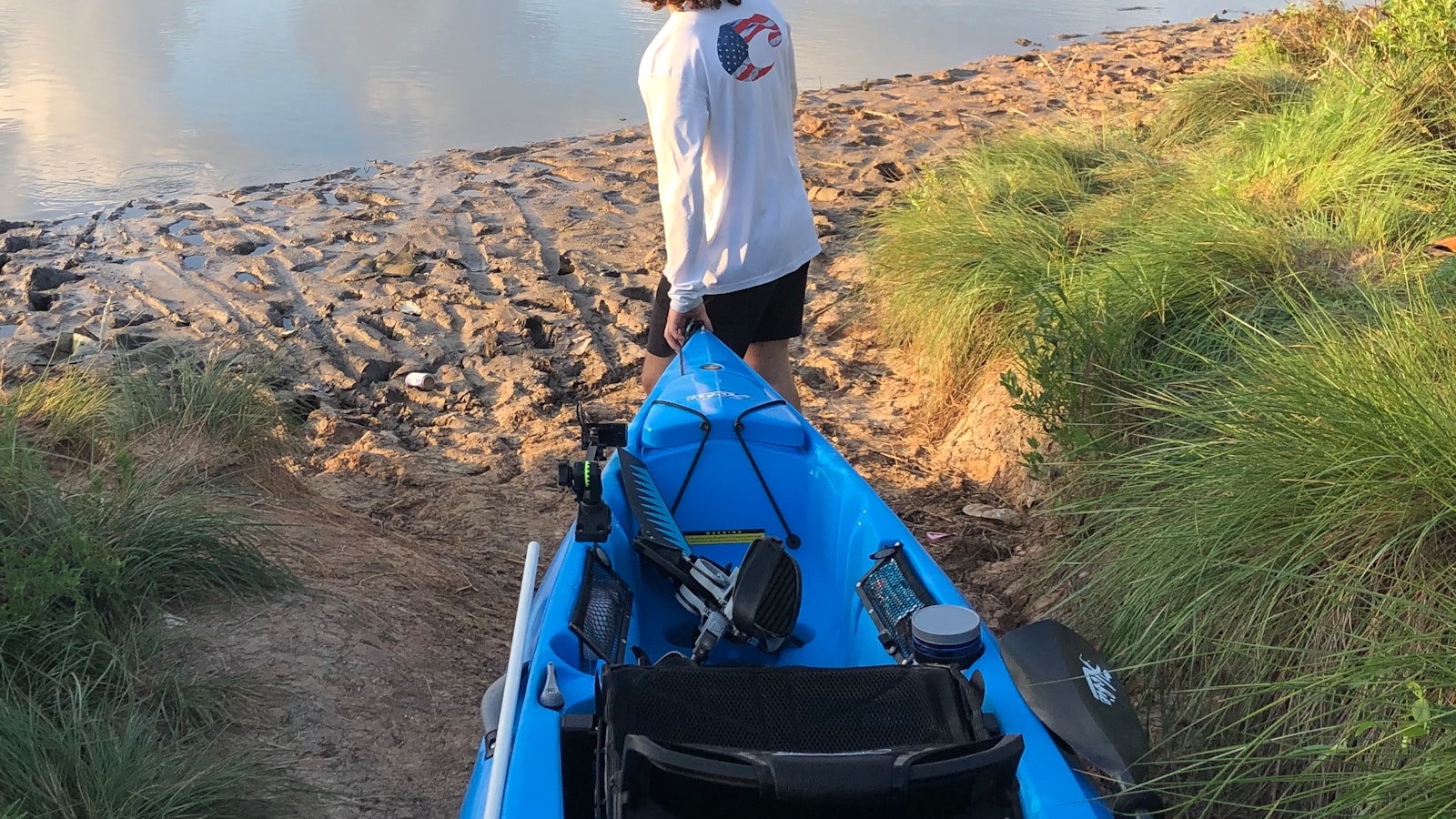
Kayak anglers have a major advantage because they can reach quiet backwater areas and shallow marsh lanes that bigger boats skip. Boat anglers can cover more water, but they still do best when they slow down around visible clues instead of running past subtle fish-holding water.
Seasonal Guide for More Redfish
Spring
As water warms, redfish become more active on flats, shorelines, and marsh edges. This is a strong season for paddle tails, spoons, shrimp under corks, and subtle topwaters. Focus on warming shorelines, mixed mud-and-grass areas, and places where bait starts showing consistently.
Summer
Summer fish often feed best early, late, or on stronger tide movement. Midday heat can push them toward mangroves, slightly deeper channels, or shaded structure, but they still slide shallow when conditions line up. On clear summer flats, stealth matters a lot. Longer casts and a quieter approach usually mean more bites.
Fall
Fall is prime redfish time in many regions. Cooling water, moving bait, and stronger feeding windows make fish easier to pattern. Expect good action around marsh drains, creek mouths, oyster edges, flats near channels, and passes. This is also when many anglers encounter larger schools and heavier fish.
Winter
Winter redfish are still catchable, but they often group in deeper holes, channels, and warmer protected water after cold snaps. Slow your presentation, fish cleaner transitions, and do not leave fish too quickly once you find them. A slower soft plastic or natural bait often outperforms fast power fishing.
Practical Tips That Help Right Away
- Plan around the tide before the forecast. Good tide movement in average conditions often beats perfect weather with poor water movement.
- Look for life first. Bait flickers, shrimp jumping, wakes, tails, birds, and mud boils all matter.
- Keep lure choices simple. A paddle tail, spoon, cork rig, and one topwater cover more than most anglers think.
- Match leader strength to the cover. Open flats allow lighter leaders; heavy shell and dock cover usually do not.
- Be quieter than you think you need to be. Redfish in skinny water can feel pressure quickly.
- Check local regulations before fishing. Slot limits, seasons, and harvest rules vary by state.
- Handle bigger breeders carefully. Quick releases matter, especially around spawning-season fish.
Final Word
If you want the simplest reliable redfish plan for 2026, start with a balanced spinning outfit, a few soft plastics, a gold spoon, a popping cork rig, and some natural bait options, then spend most of your effort reading tide, structure, and bait movement. Think less about random casting and more about intercepts. Where will shrimp or baitfish leave the marsh? Where will a redfish sit so it can eat without wasting energy?
That practical mindset is what makes redfish so rewarding. They are strong, accessible, and honest fish. When you match the tide, find the edge, and present something believable at the right speed, redfish stop feeling mysterious and start feeling repeatable.